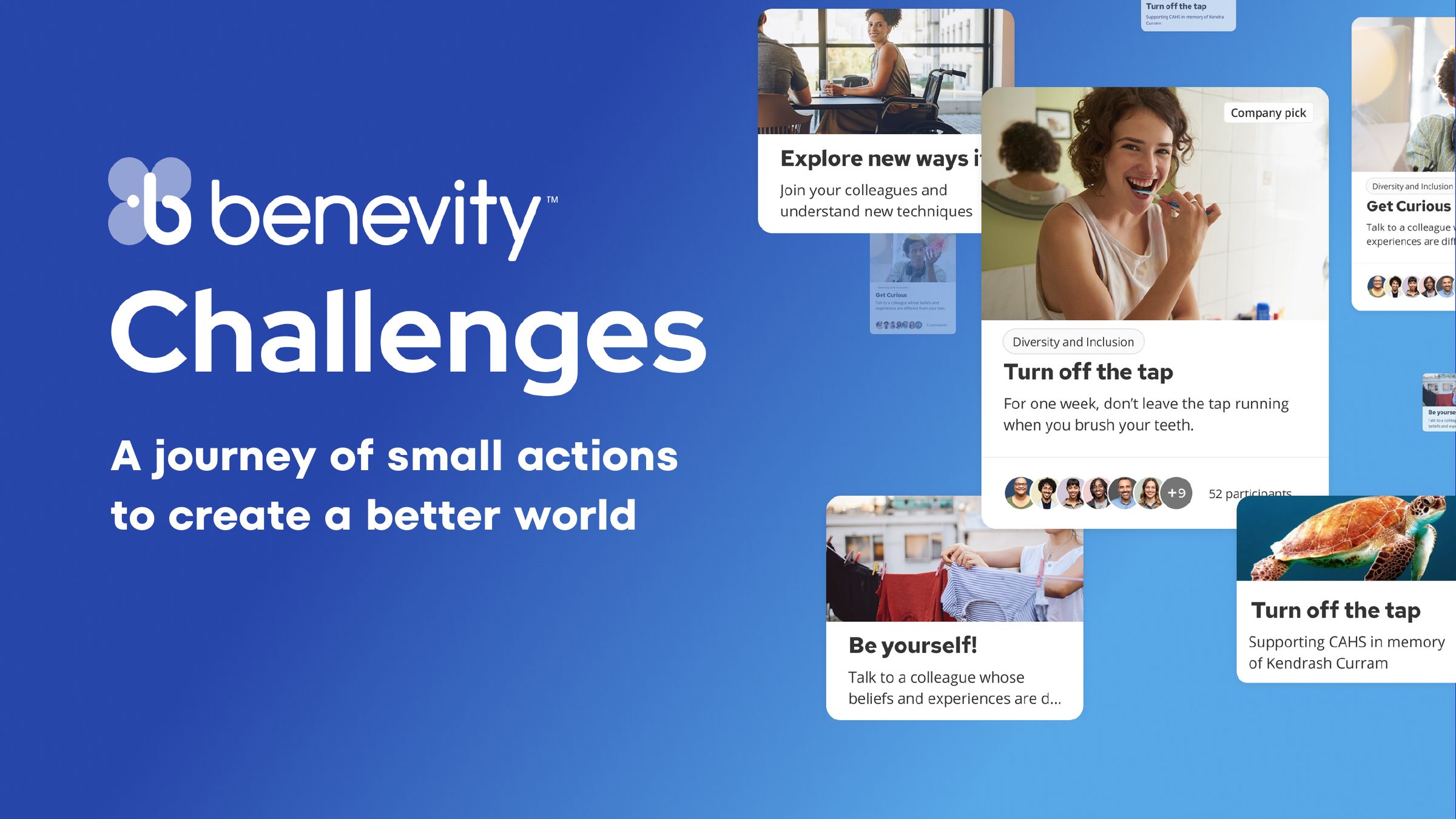
Bringing Challenges, a gamified "small actions, big change" product from the Alaya acquisition, into the Benevity platform, from discovery to general availability.
Benevity helps companies engage employees and customers in supporting causes: donations and matching, volunteering, community investment and measuring impact. It acquired Alaya, a purpose-driven employee engagement platform, and wanted to integrate Alaya's Challenges module.
The Barcelona product team needed someone with integration experience and strong async skills during a culture merger, and it was starting its first project with a content designer. Benevity's mission spoke to me, so I took on the challenge.
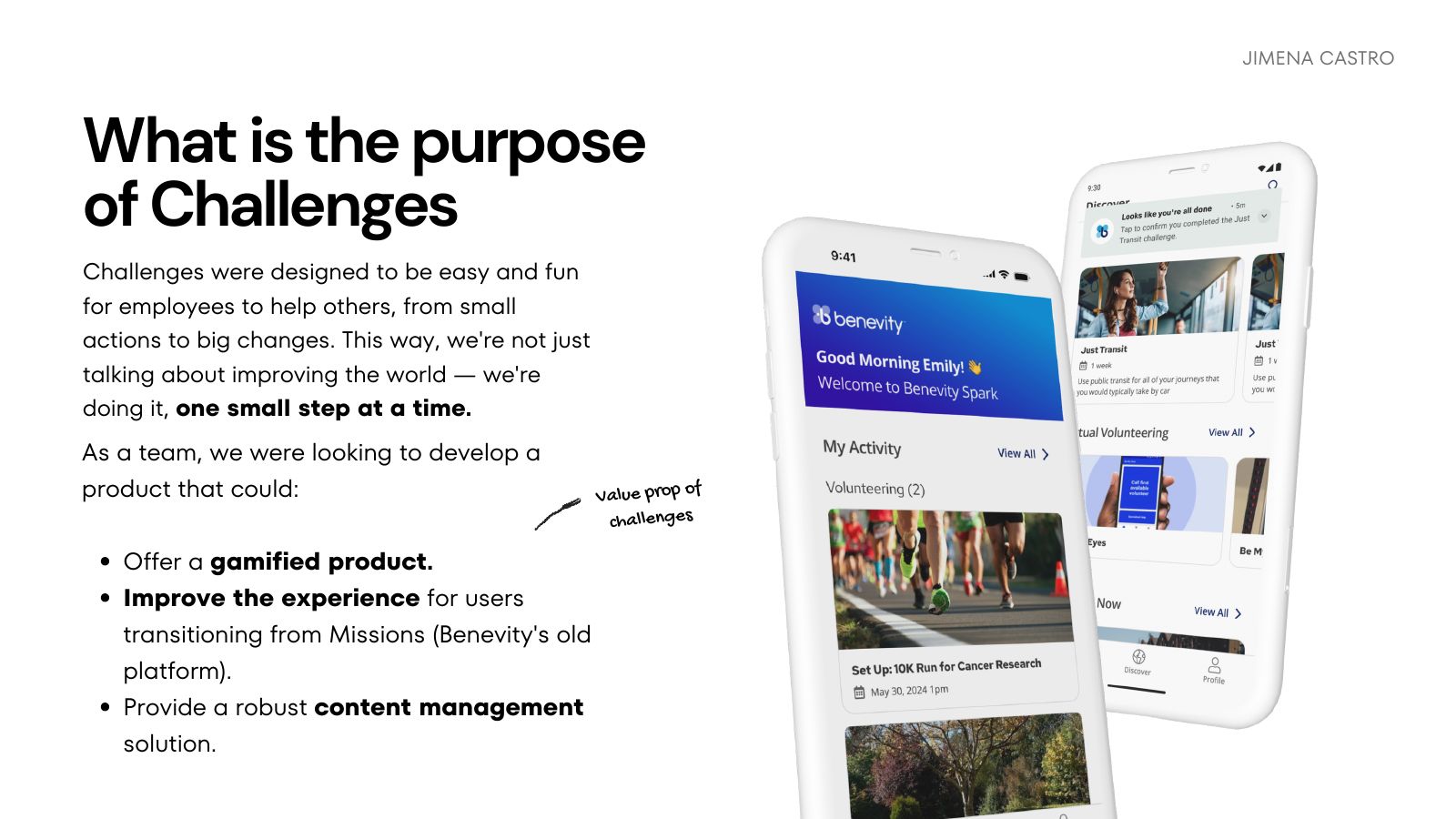
Challenges make it easy and fun for employees to help, from small actions to big changes. The goal was a gamified product, a smoother path for clients moving from Missions, Benevity's older module, and a robust content management solution.
Some clients left because it was too complicated. Others relied on it heavily and didn't want to lose its features.
Alaya was now Benevity, so Challenges had to align with the platform, and some clients weren't convinced yet.
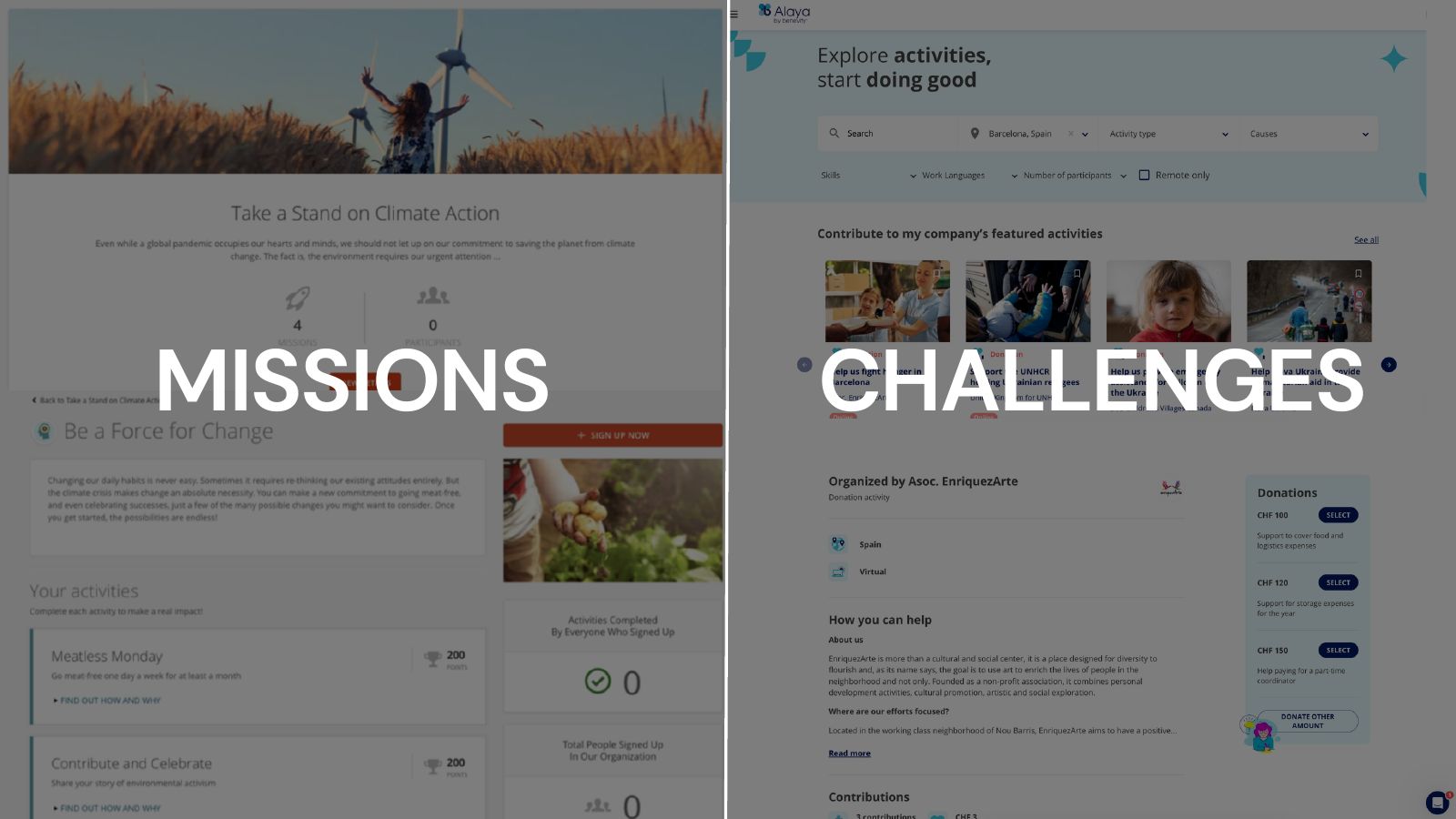
UI improvements were easy to spot. The real work was deciding which experience to bring to market, and who needed to be involved to get there.
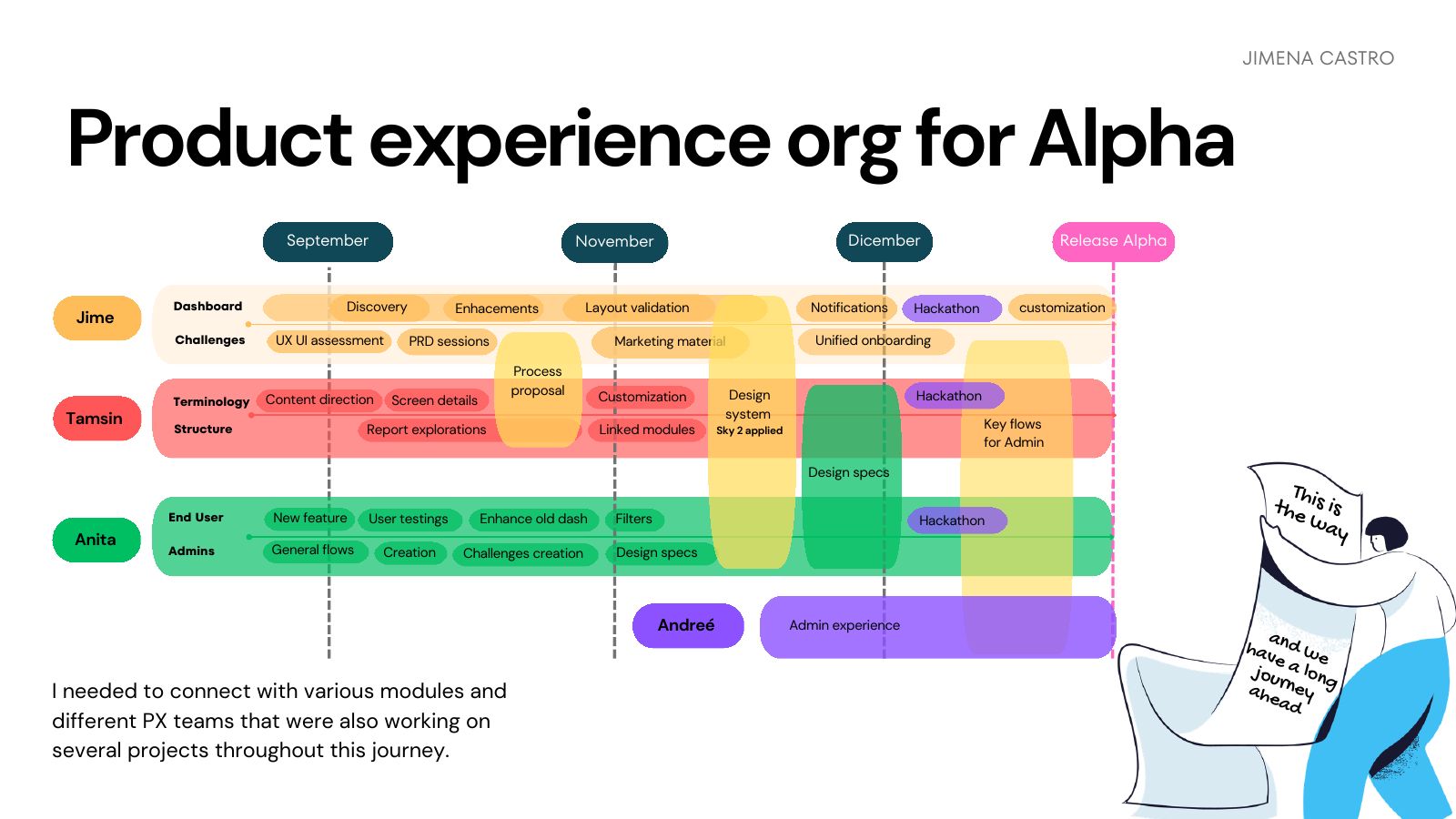
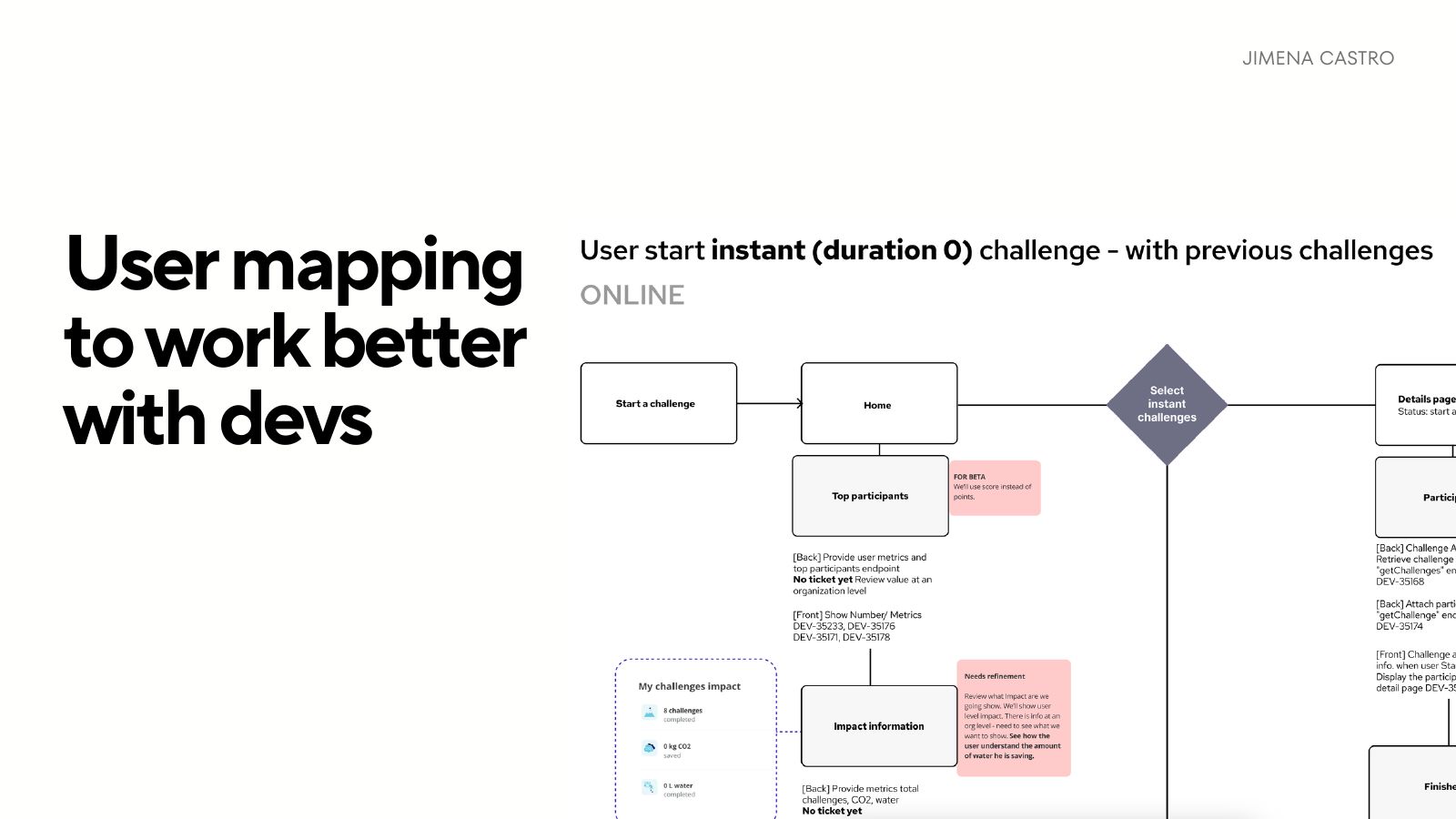
Discovery ran between Canada and Spain, with interviews and tests on both platforms. To focus fully on Challenges I delegated my dashboard work, ran workshops to set a clear roadmap, built a working process with the content team, and worked with the Skyline design system team on applying their uplift to Challenges.
We tested with 20 people: 10 on Alaya Challenges and 10 on Benevity Missions.
of Missions users couldn't find a theme that suited their needs.
of Challenges users didn't understand when they had completed a challenge.
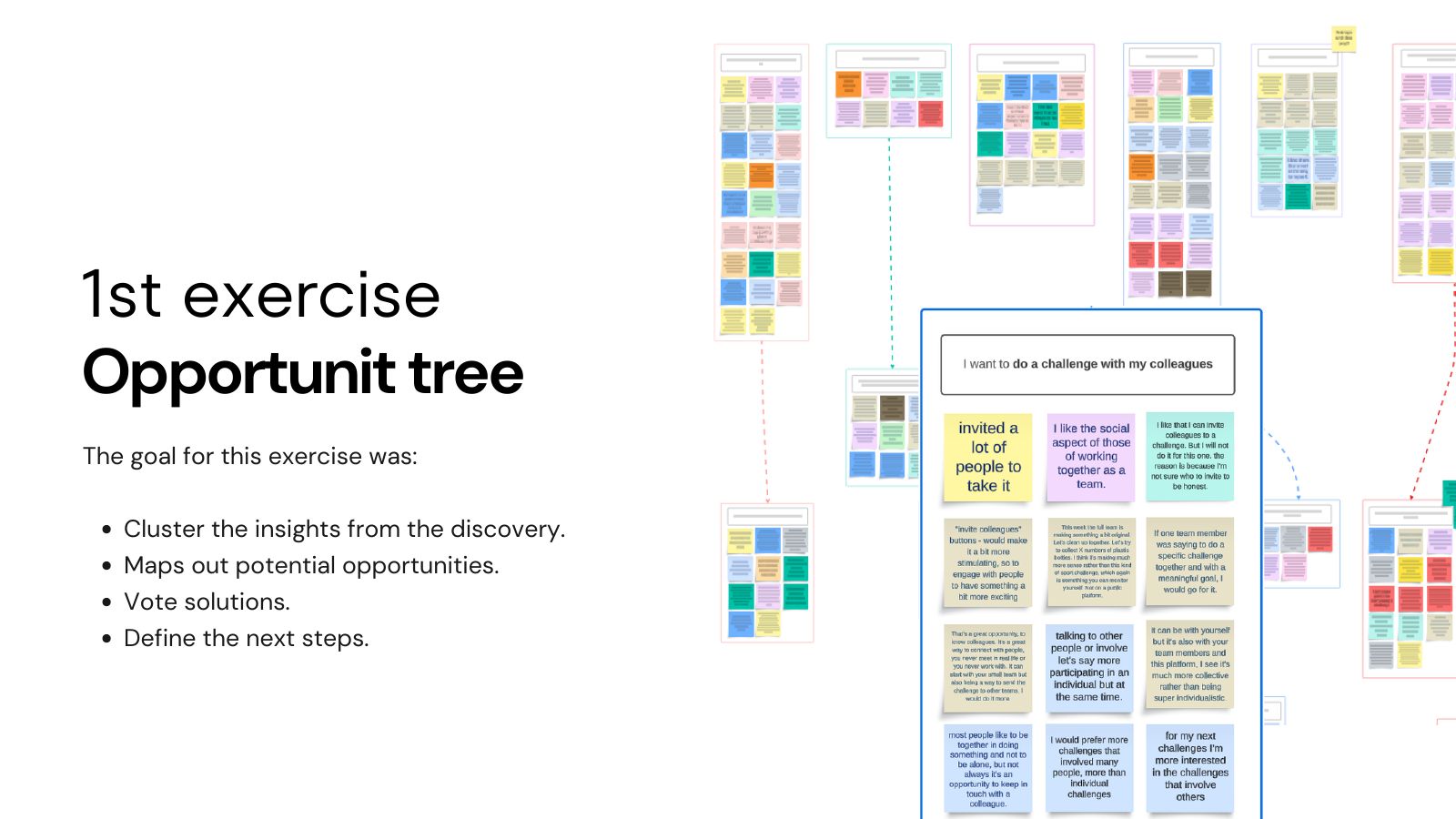
Opportunity tree. We clustered the discovery insights, mapped opportunities, voted on solutions and agreed next steps.
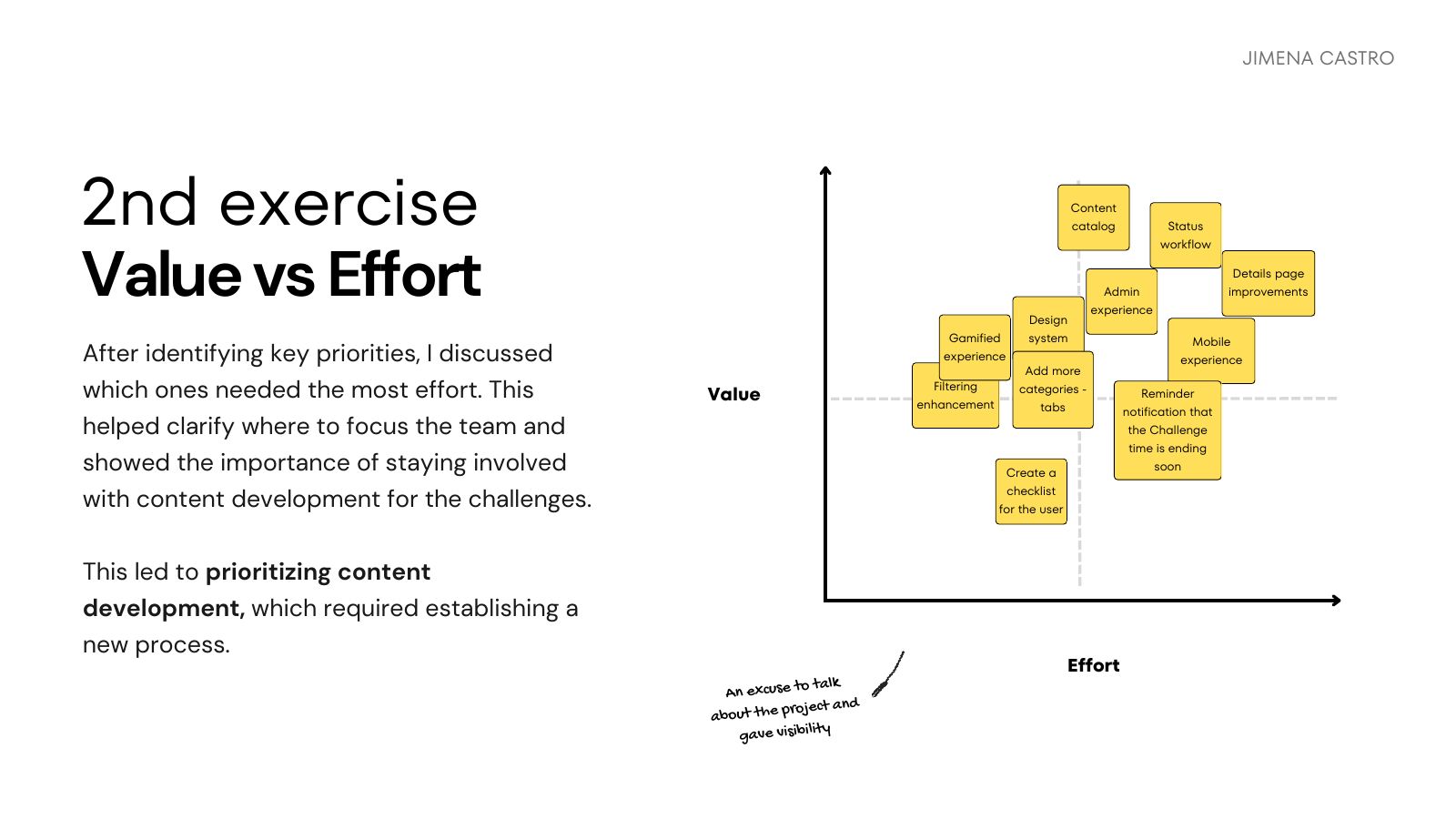
Value vs effort. This showed where to focus the team, and how much content mattered. Content development became a priority, which meant creating a new process for it.
Weighted scoring. Each item was scored against the company's OKRs: update the catalog, complete a challenge, create a challenge. The most important features already existed in Alaya, so we started with parity, aiming to keep the 60% completion rate Alaya had with Challenges.
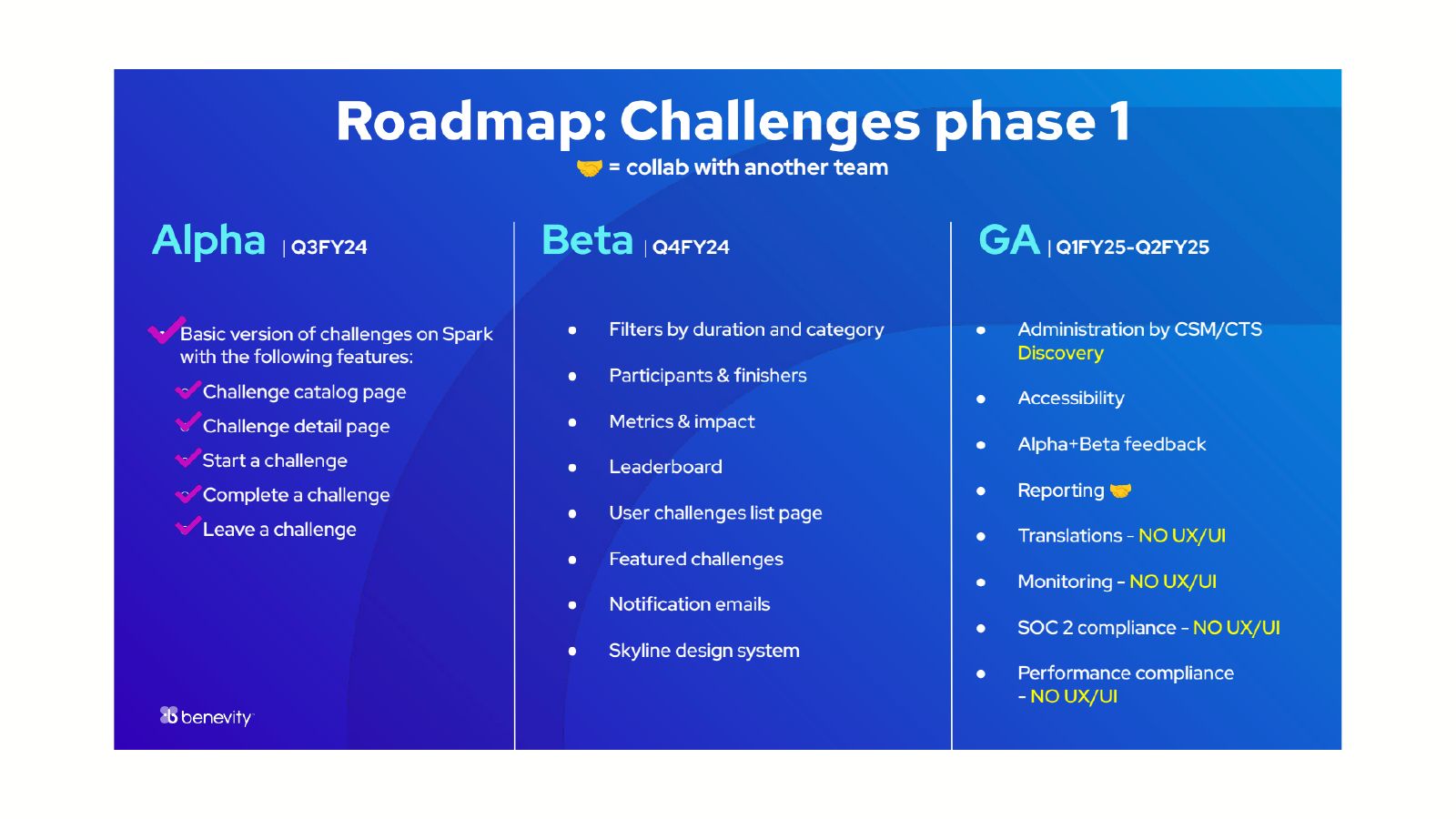
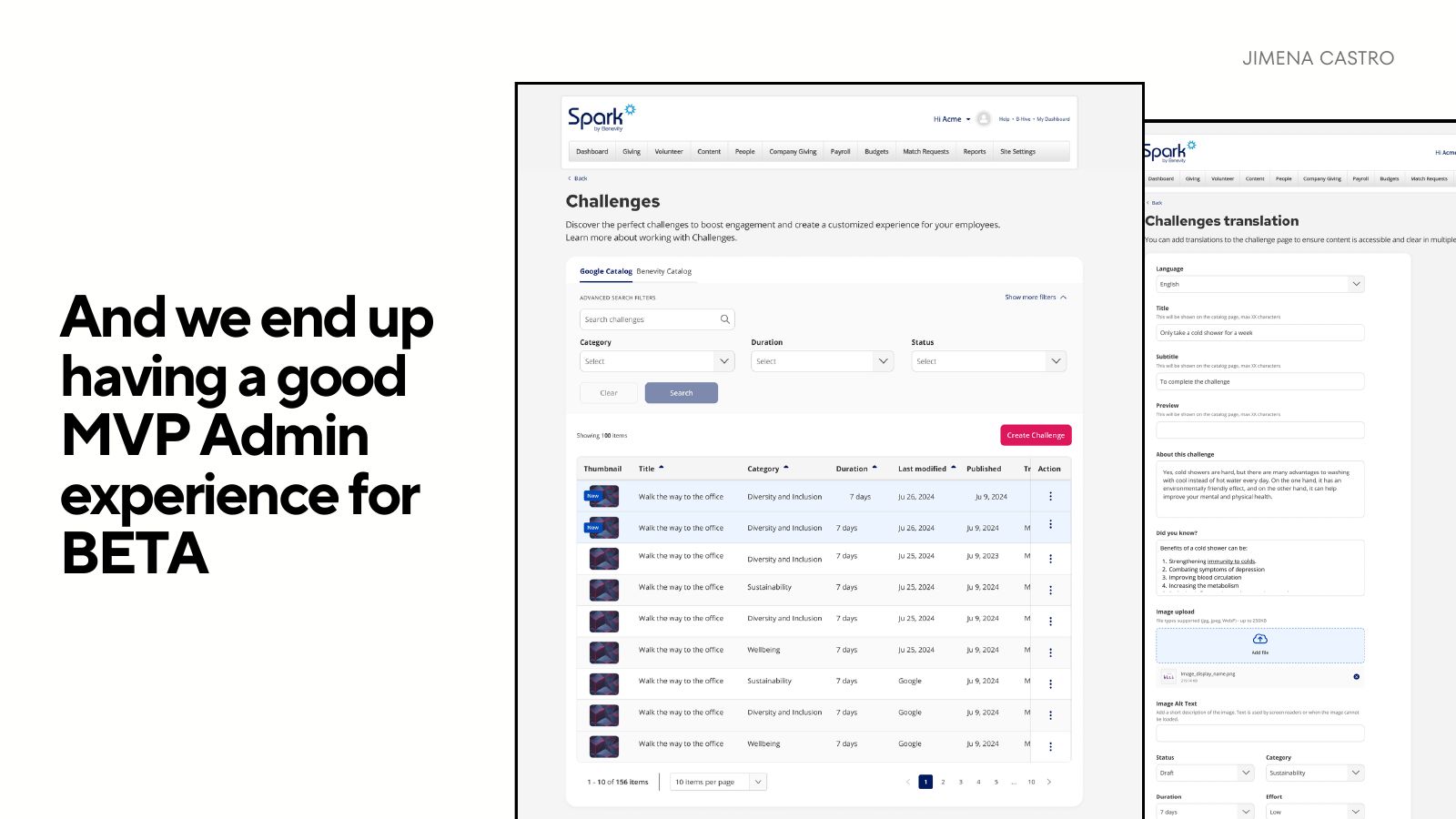
For the first releases, administration stayed in Alaya while employees took part in Challenges inside Benevity. Alpha would reach parity and match the completion rate; later phases would close the gaps with Missions.
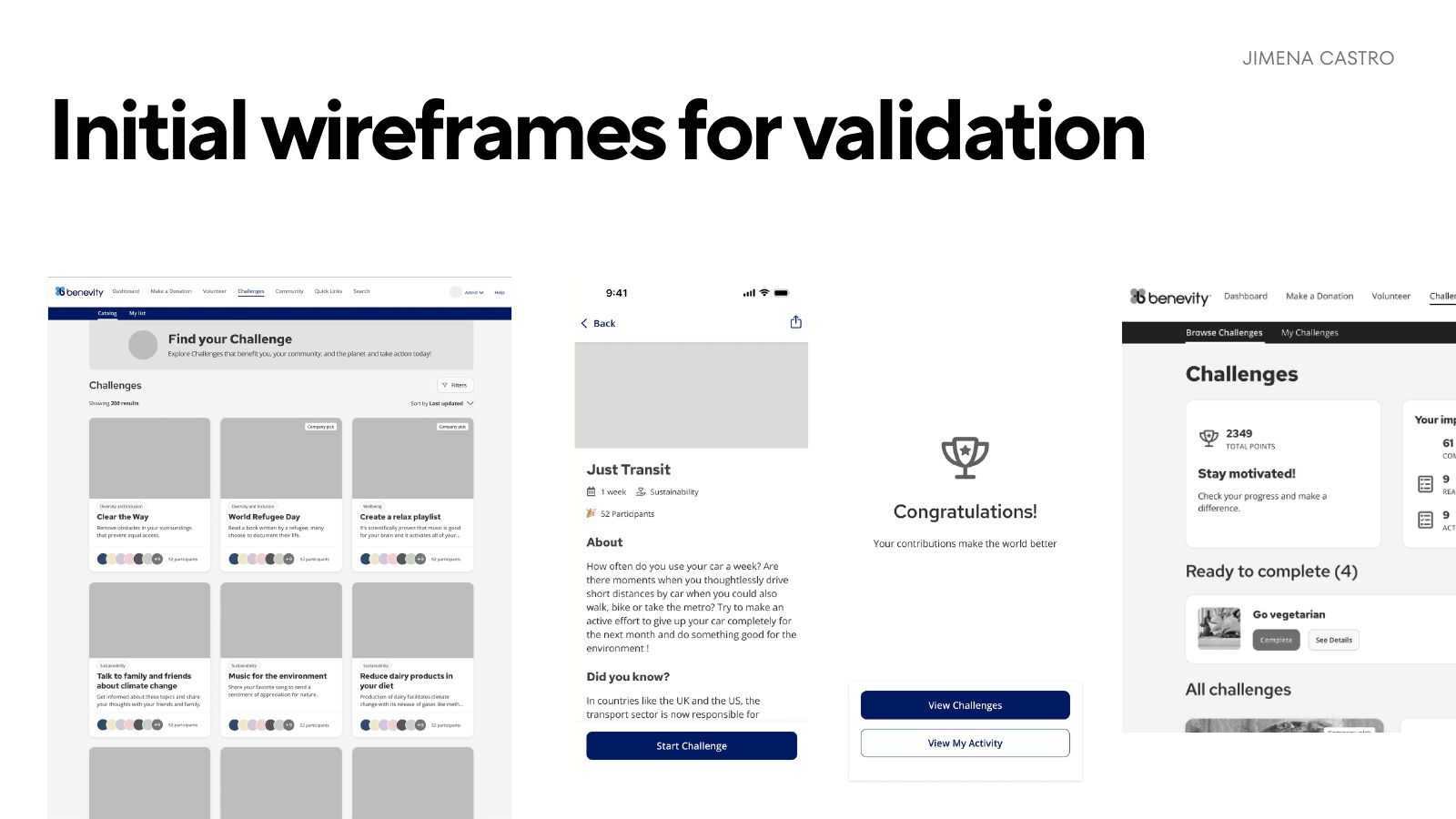
Catalog, detail page, start, complete and leave a challenge, plus a content strategy.
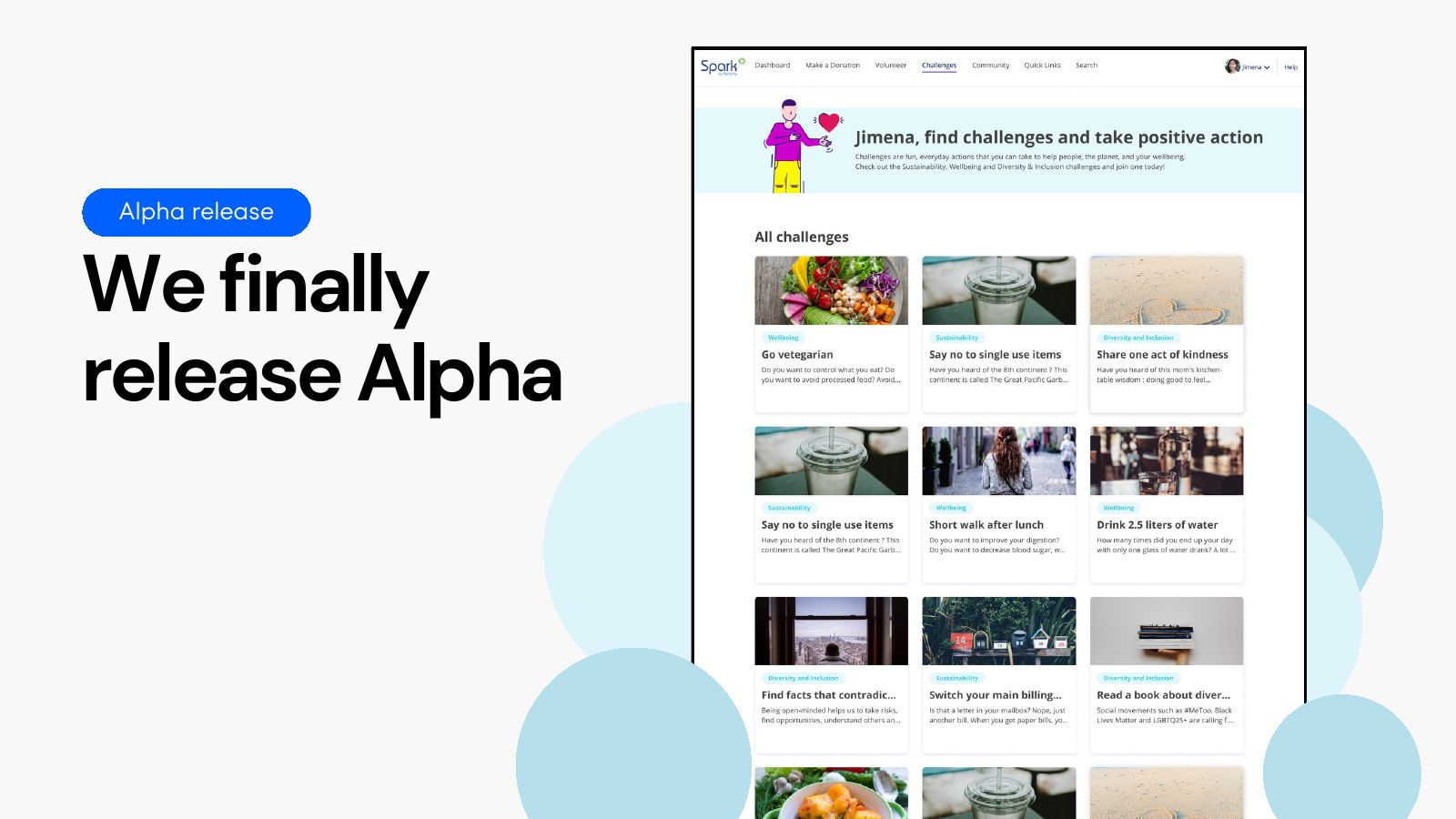
Alpha feedback applied, filters, leaderboard, notifications, Skyline design system and an admin experience.
Full admin experience, parity with Missions, accessibility, reporting and translations discovery.
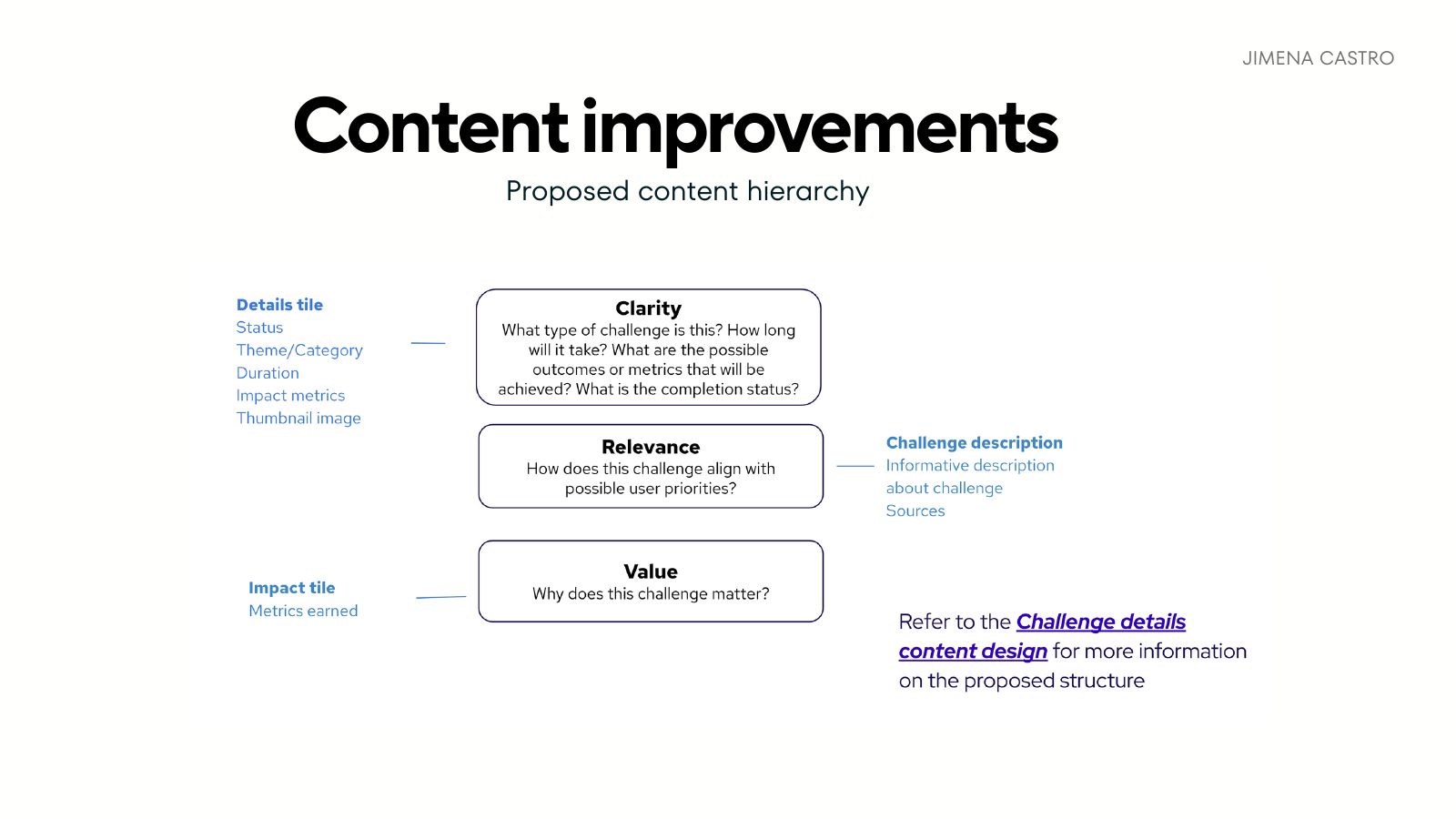
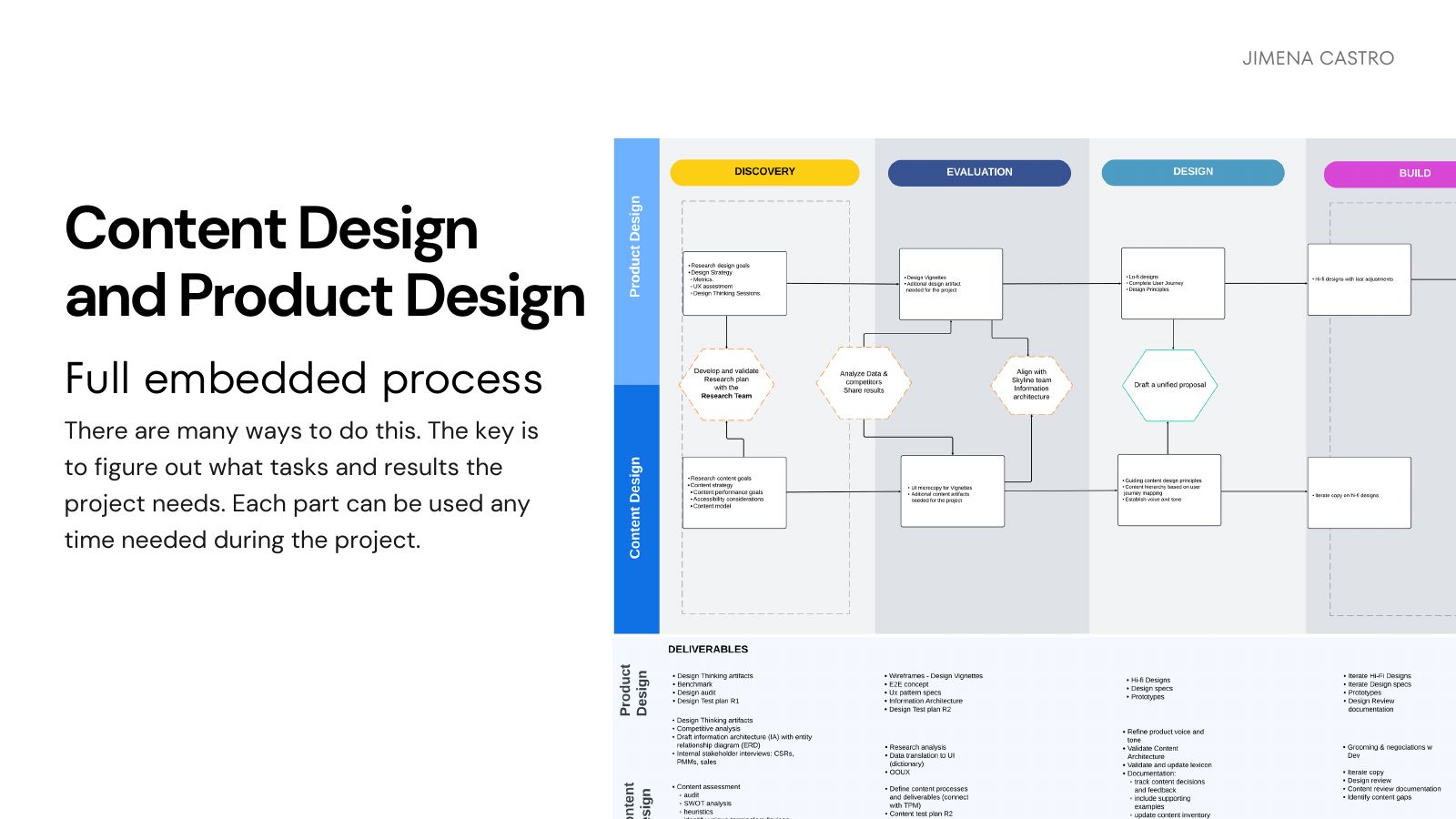
This was the team's first project with a content designer, so we built an embedded content and product design process and shared it with leaders and stakeholders. We restructured the challenge detail page around a clear content hierarchy, guided by four experience principles:
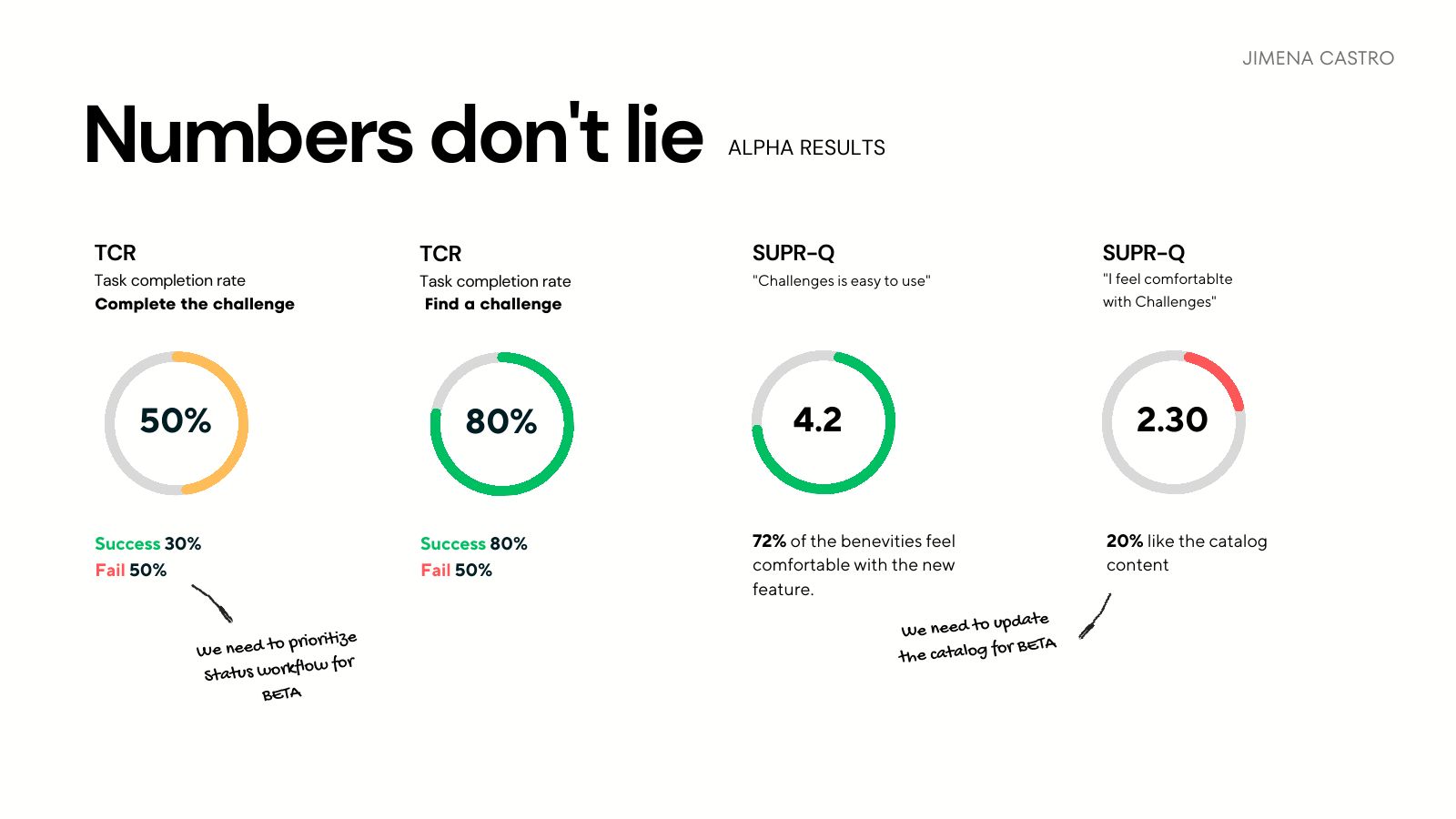
task completion when finding a challenge.
task completion when completing a challenge.
of Benevity employees felt comfortable with the new feature.
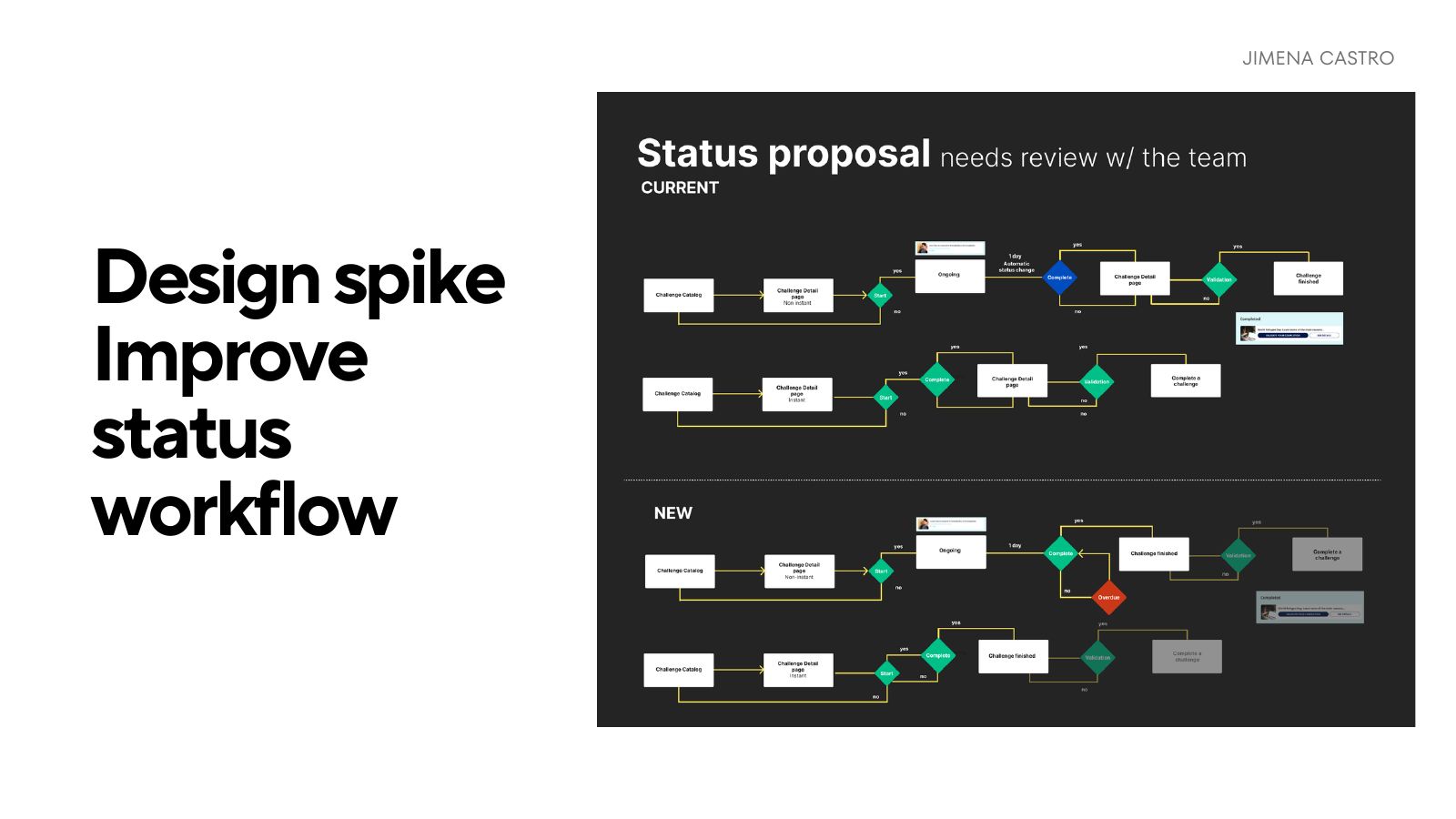
Only 20% liked the catalog content, and people didn't connect the catalog categories with what was shown. The results also confirmed my hypothesis about the status logic. Two clear priorities for Beta: update the catalog and fix the status workflow.
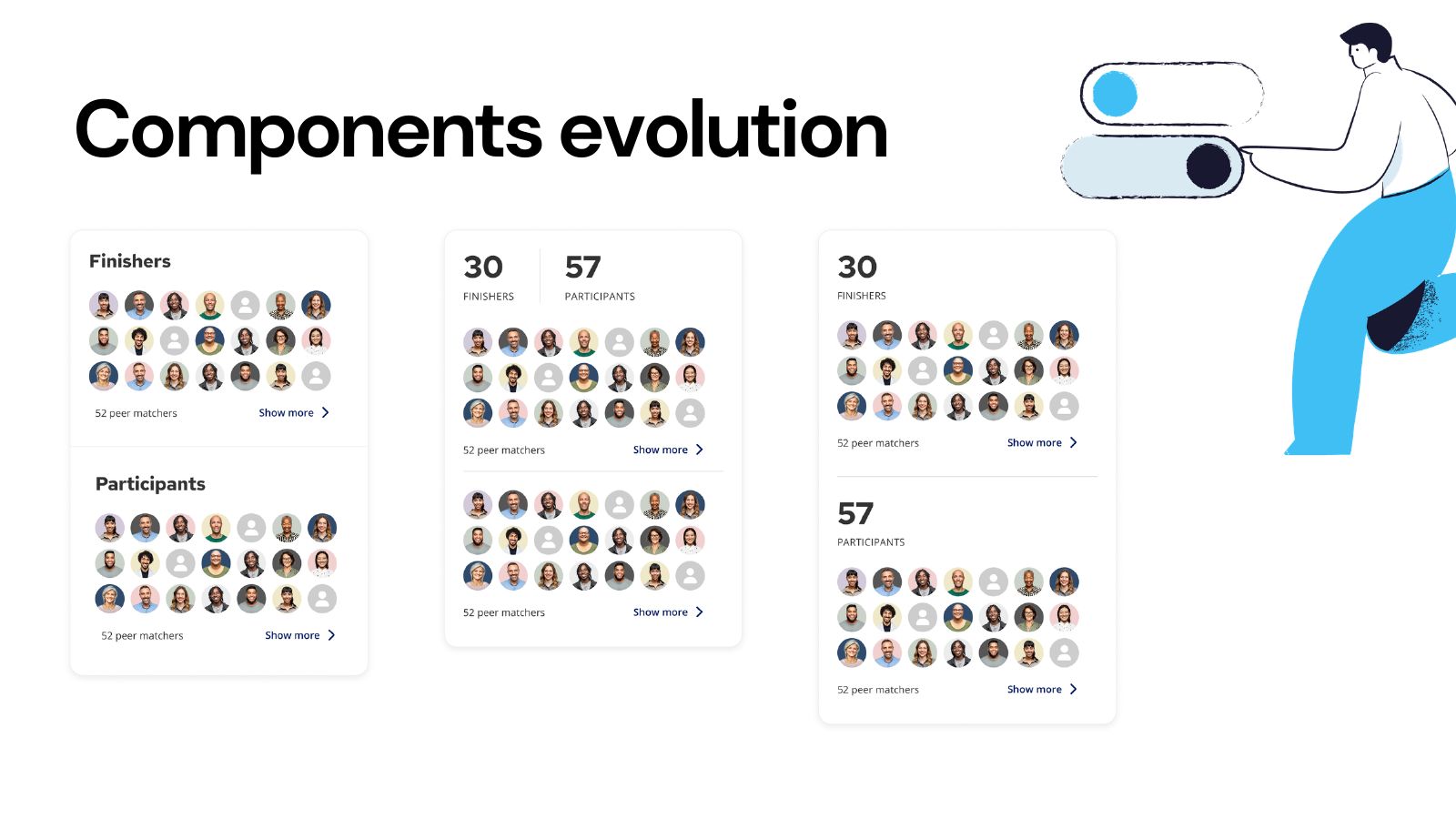
Skyline's uplift became a priority, so I reviewed what had been designed and evolved the components to match. Sessions with developers set how to move forward, and a design spike reworked the status workflow.
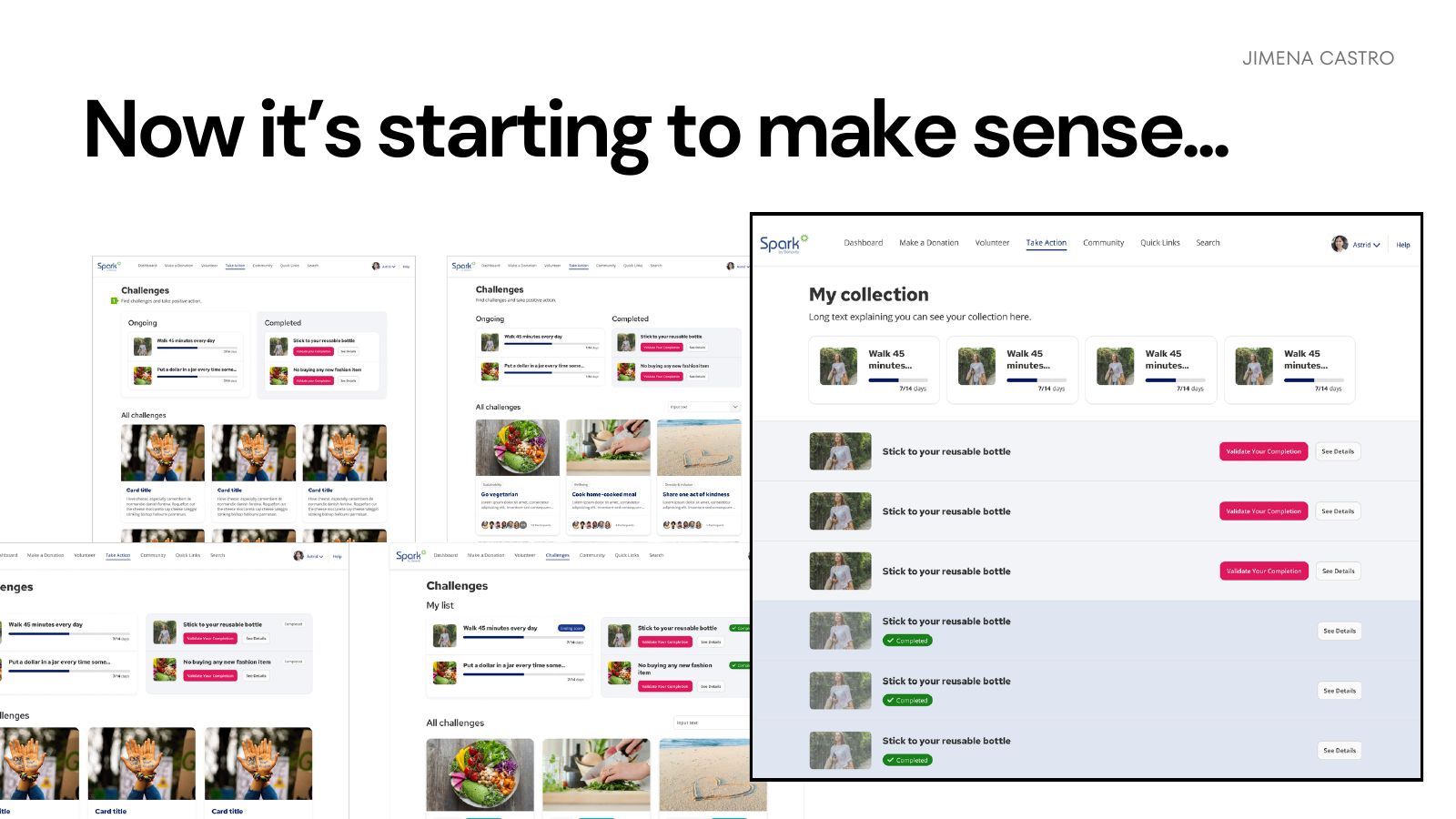
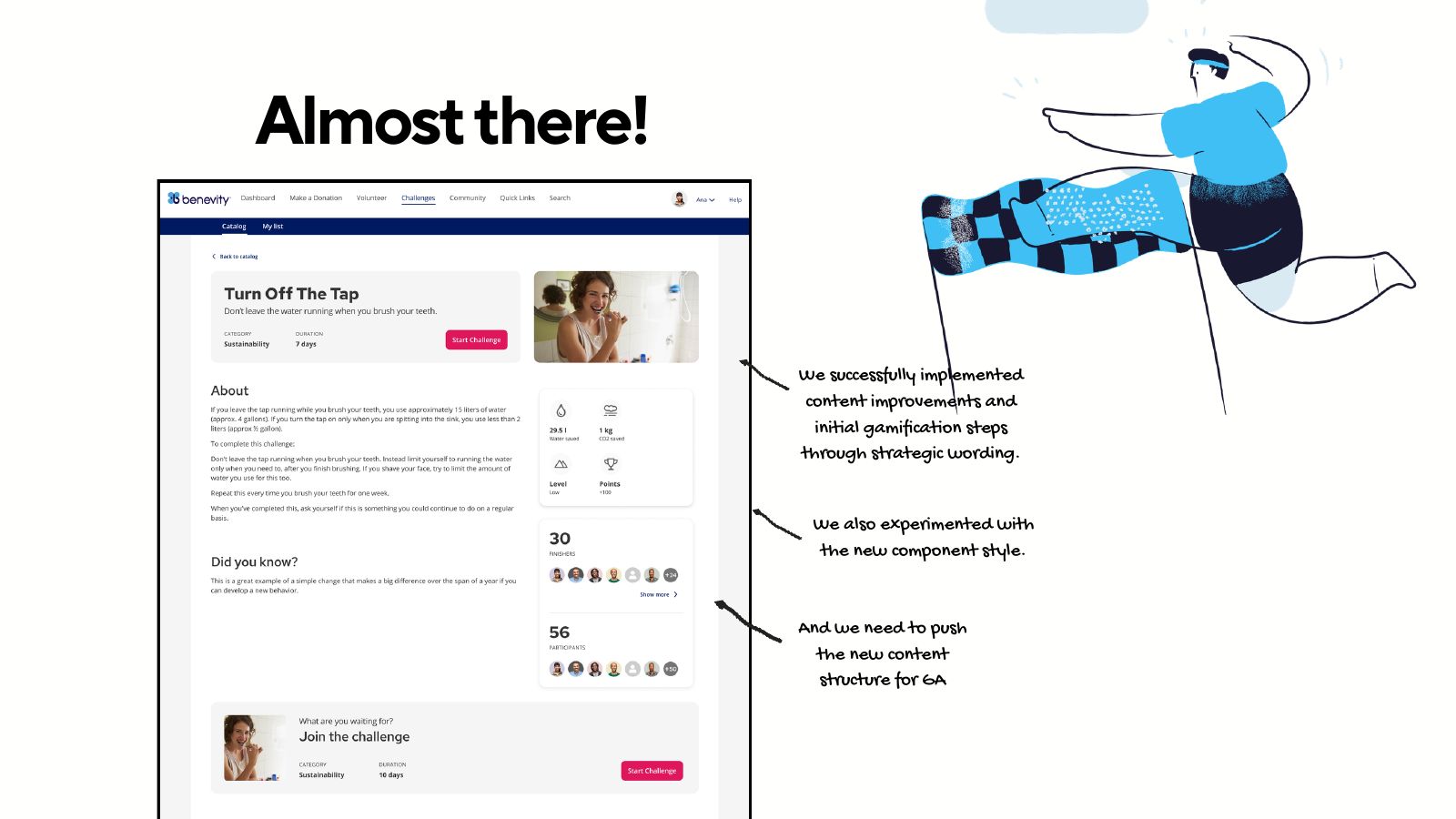
We shipped content improvements and the first gamification steps through wording, with accessibility specs throughout.
We refreshed images and content for 200 new challenges for the clients testing Beta on their staging sites.
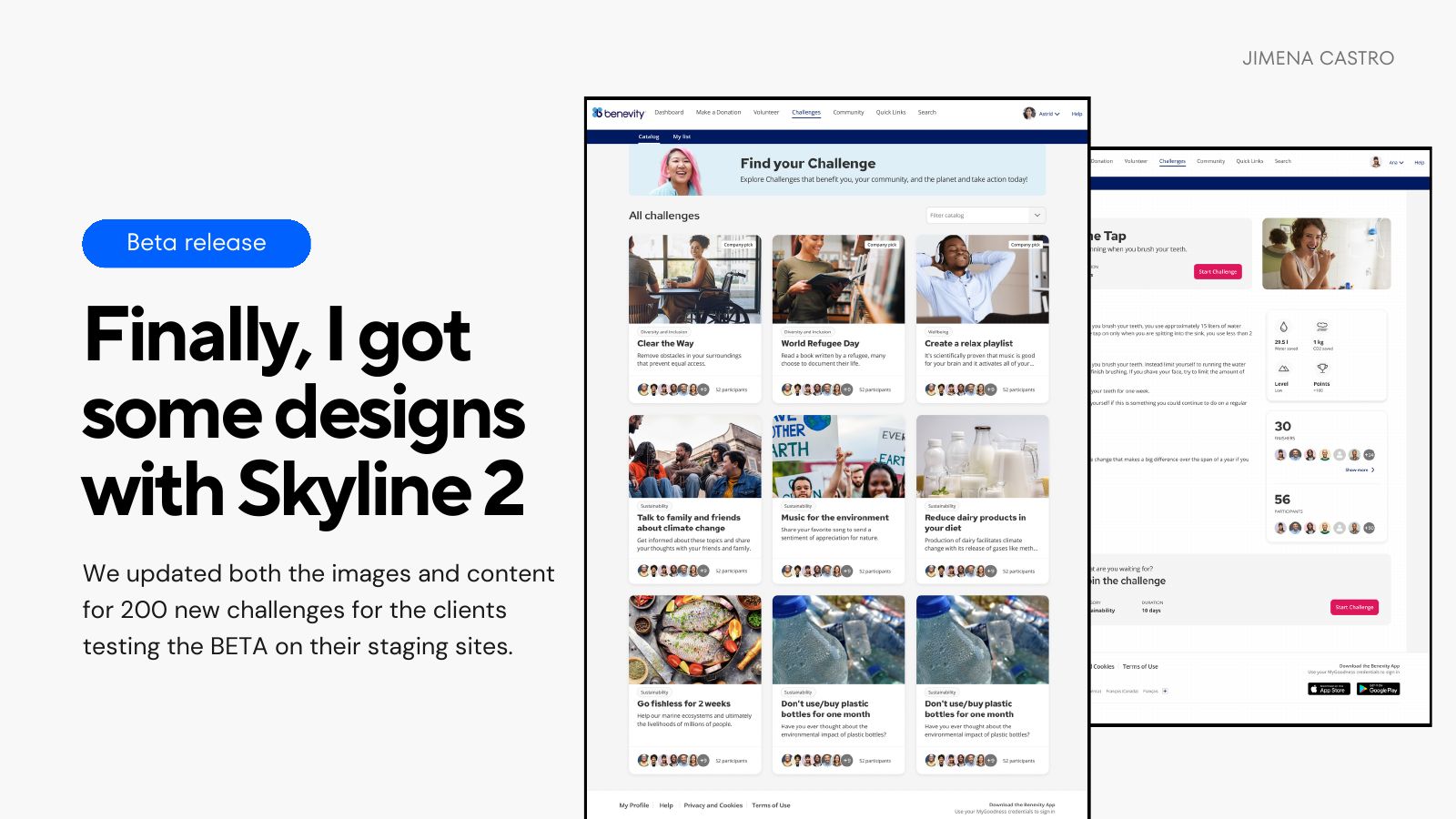
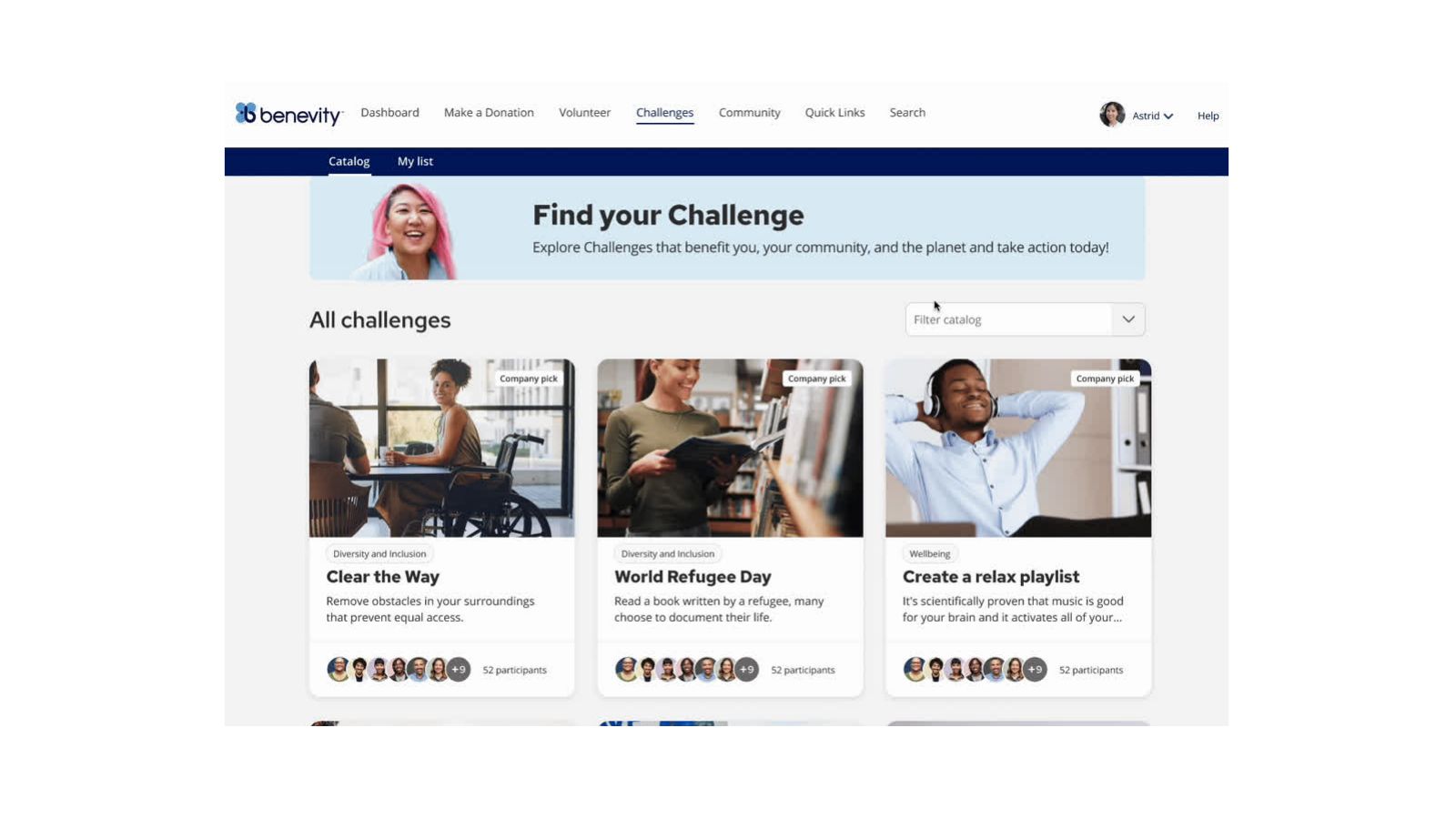
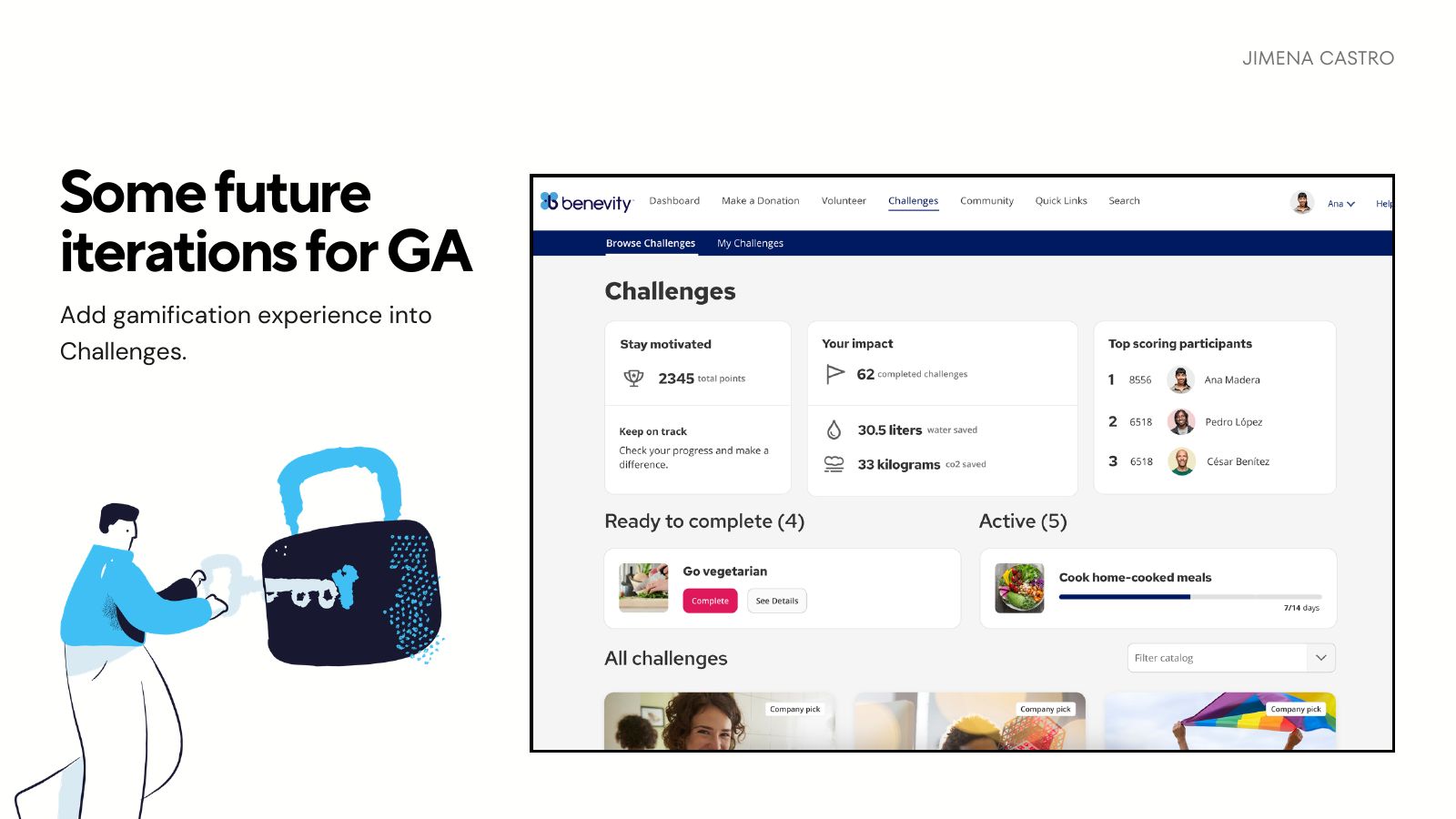
Alpha and Beta were the first experiment; GA is the mature one. Next came a Beta testing plan, a better path for clients joining Benevity through Challenges, and a strategy for a habit-forming product with more gamification.
GA success metrics, measured in phases: launch, stabilise, then optimise.
| Target | Week 1 | Month 1 | Month 3 |
|---|---|---|---|
| Join rate | 15% | 20% | 25% |
| Completion rate | 10% | 15% | 20% |
| Time to first action | ≤ 48h | ≤ 36h | ≤ 24h |
| Abandonment rate | 70% | 60% | ≤ 50% |
Next time I'd change the order of the workshops, so everyone understands the product goals and what we're aiming for as a team before we start deciding.
With GA released, the focus moves to making the gamification experience better.
I believe we did an excellent job as a team.