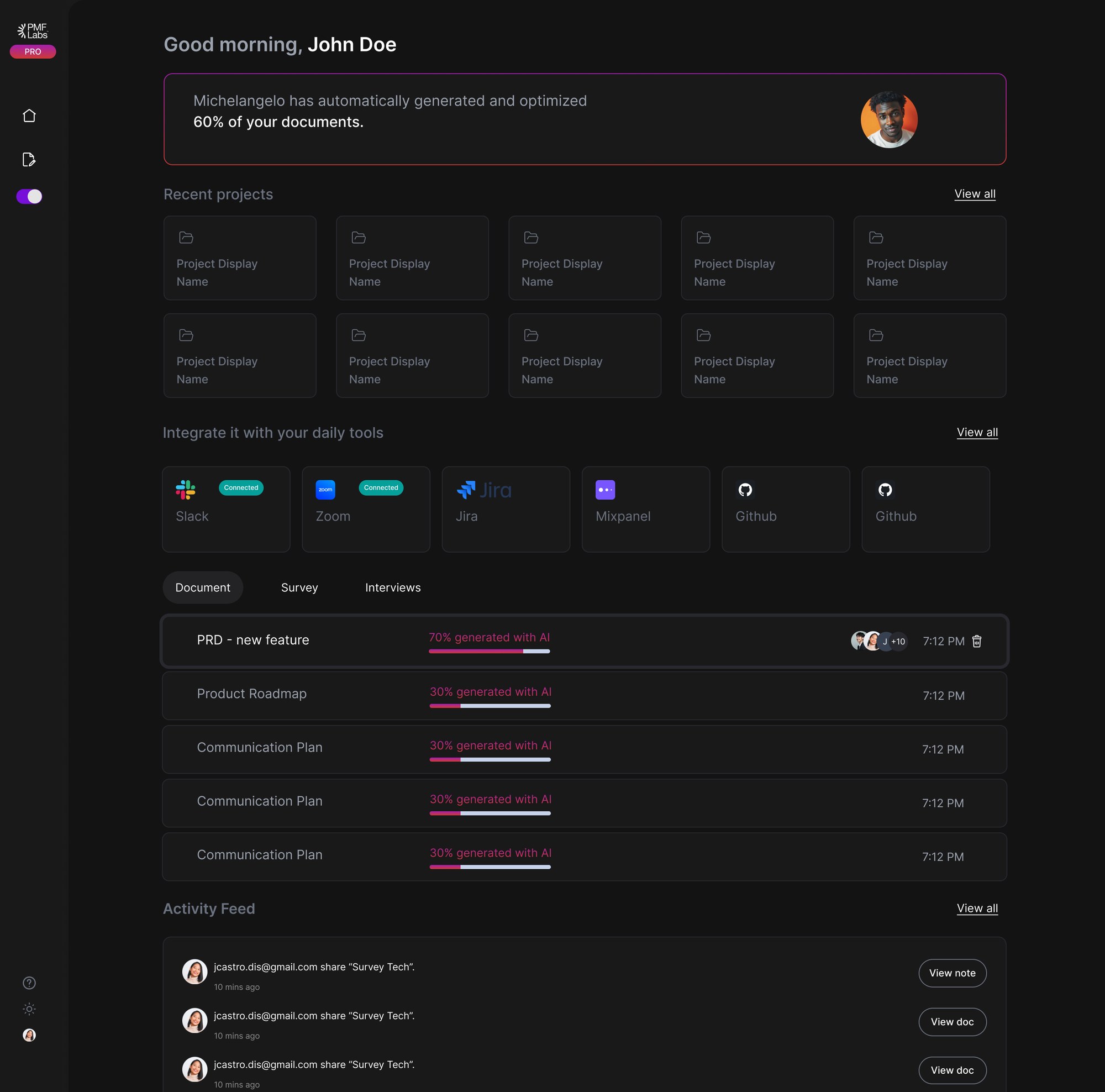
Turning an early GenAI typing tool into Michelangelo, an AI assistant that helps product teams think, frame problems and decide.
Teams struggled to define product strategy in fast-moving, AI-driven contexts, with no research or validated product to start from.
Discovery with PMs, designers and founders, then a reframe from typing help to guided strategic thinking.
A first release, a library of AI interaction patterns and an AI-native design system to build on.
User interviews with product managers, designers and founders, market mapping of GenAI tools, and workshops with internal teams.
of product teams report low confidence in how they define product strategy.
of PMs spend too much time gathering inputs and not enough making decisions.
of 200+ GenAI creation tools support structured thinking.
wanted AI that guides thinking, not just writes text.
of a product team's time goes to switching between research, notes, docs and ideas.
said they need help framing the problem, not producing more output.
I reframed the early typing tool as an exploration engine that helps teams move from chaos to clarity.
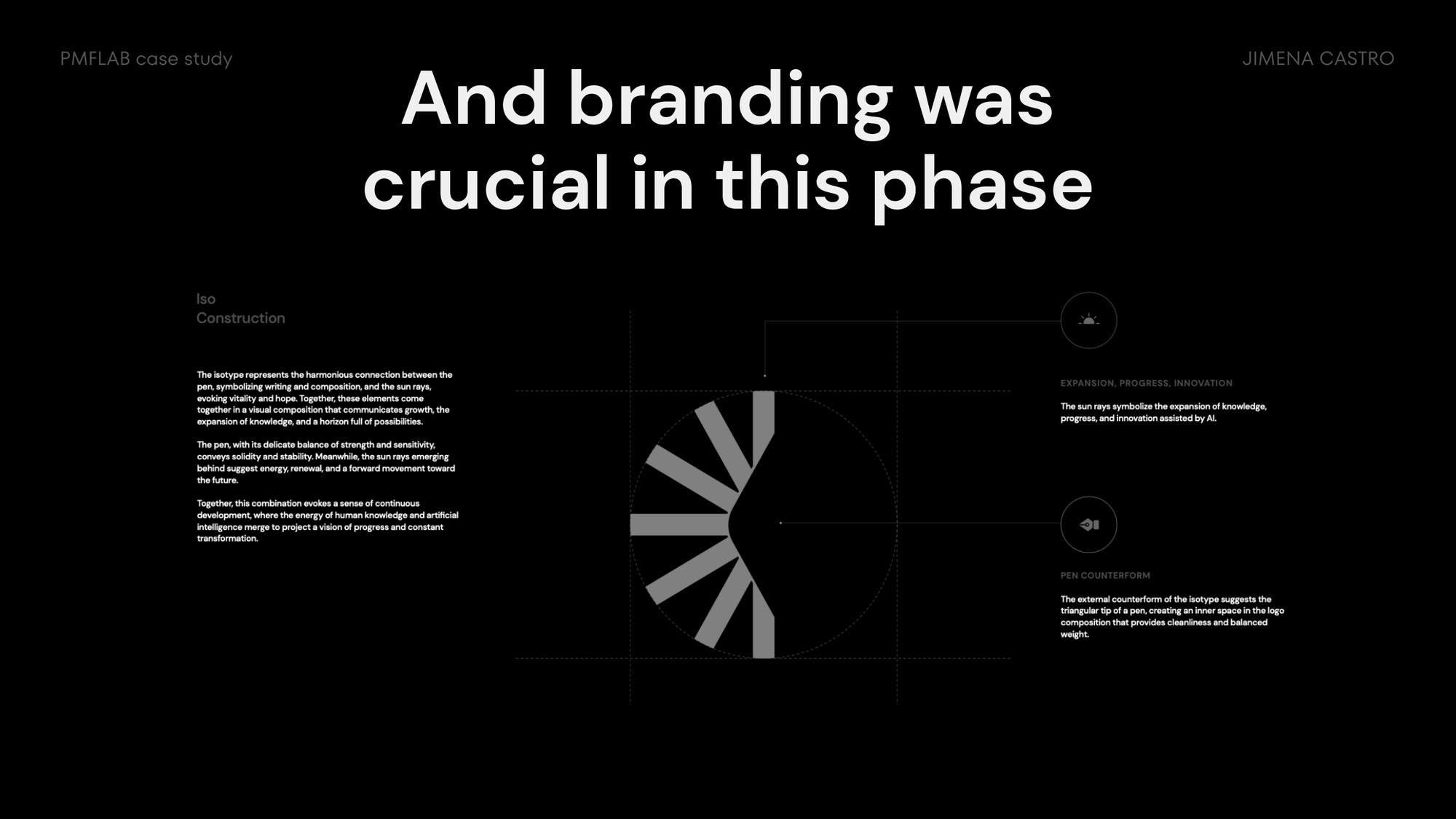
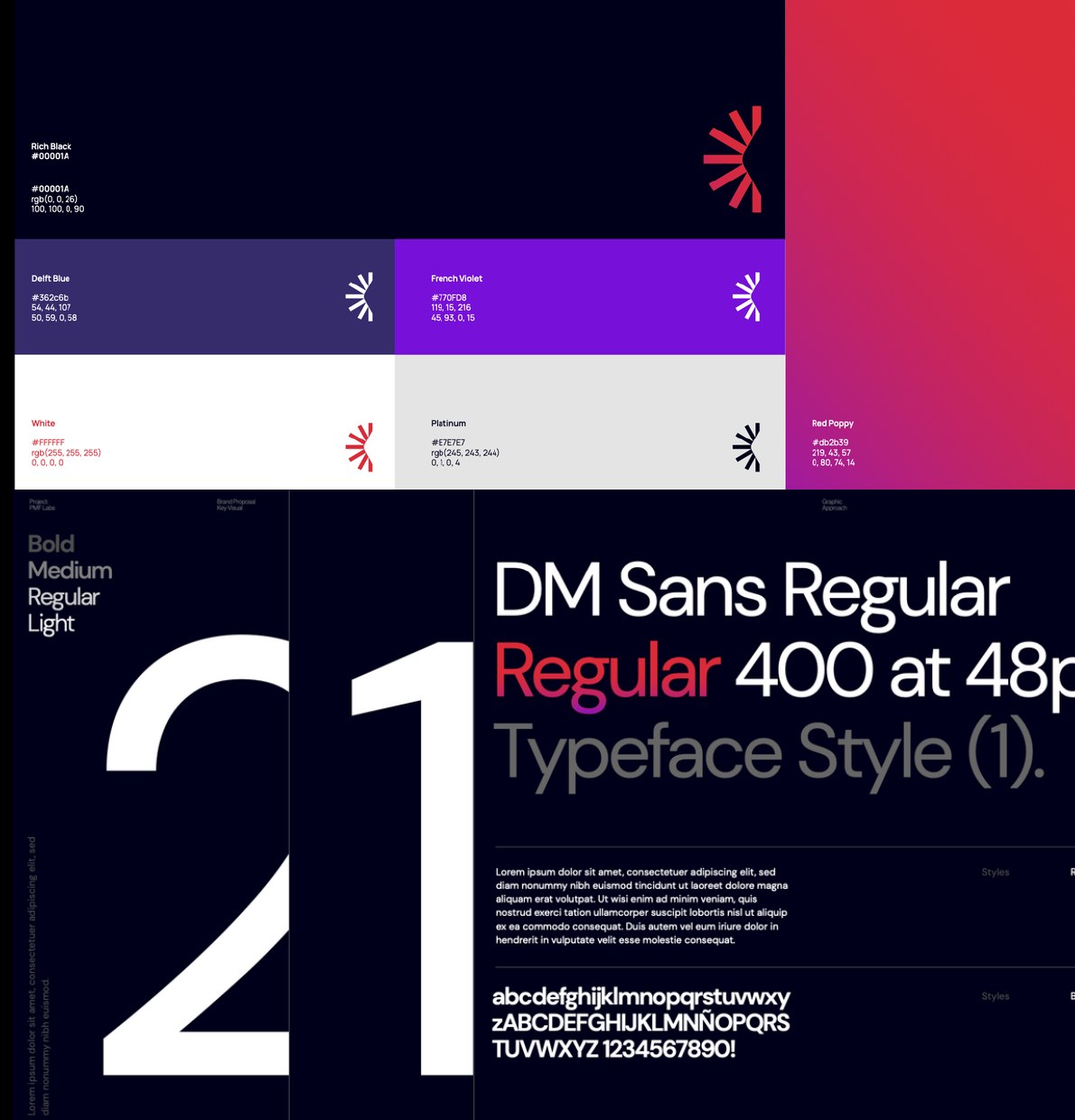
Logo construction, a bold colour palette and DM Sans typography, ready to scale across product and marketing.
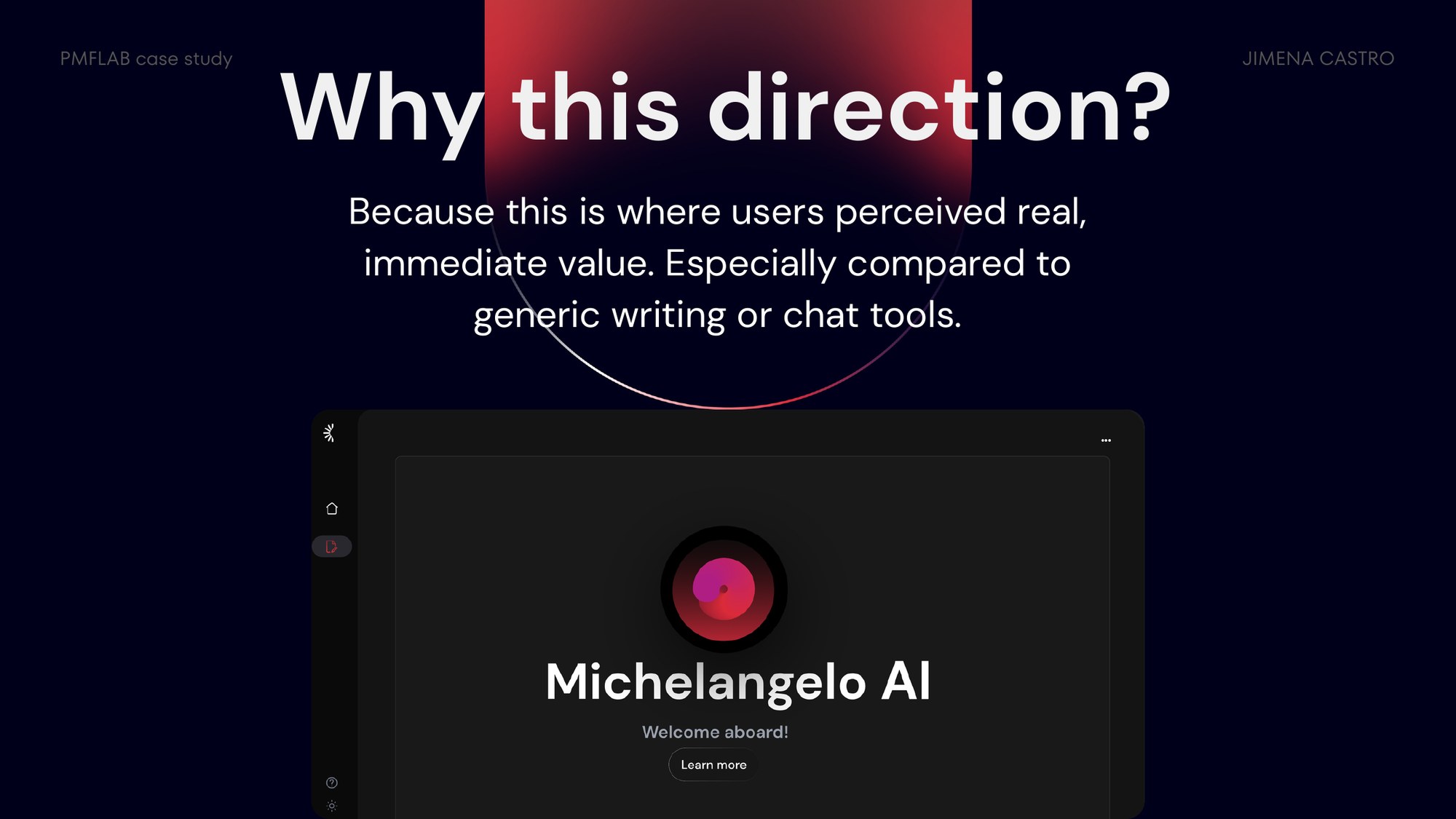
Testing early prototypes showed the strongest traction in features that speed up strategic clarity: framing problems, generating options and synthesising research.

Users saw real, immediate value here, especially compared to generic writing or chat tools.
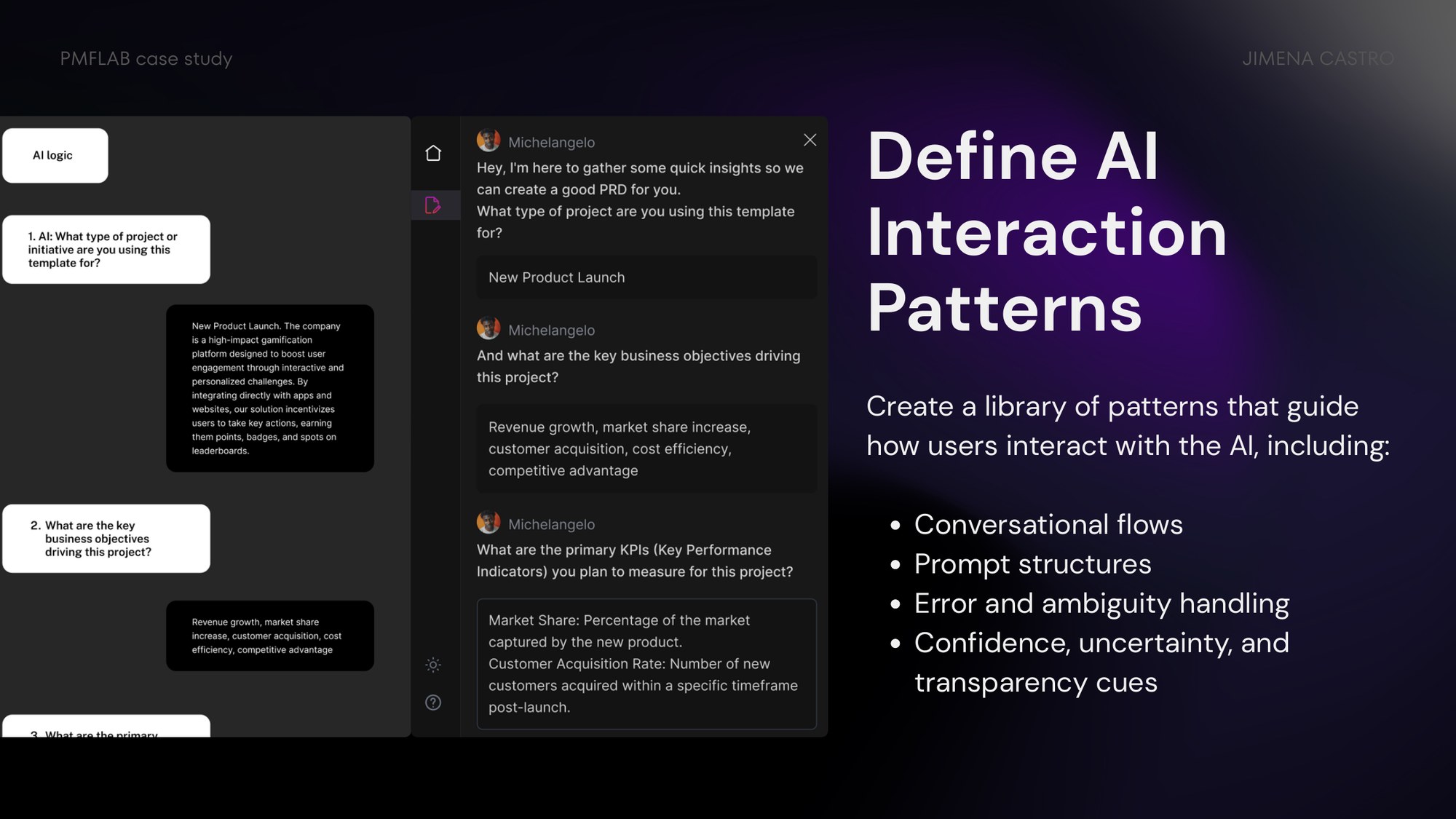
From a blank prompt to a structured PRD, every flow was mapped before the interface.
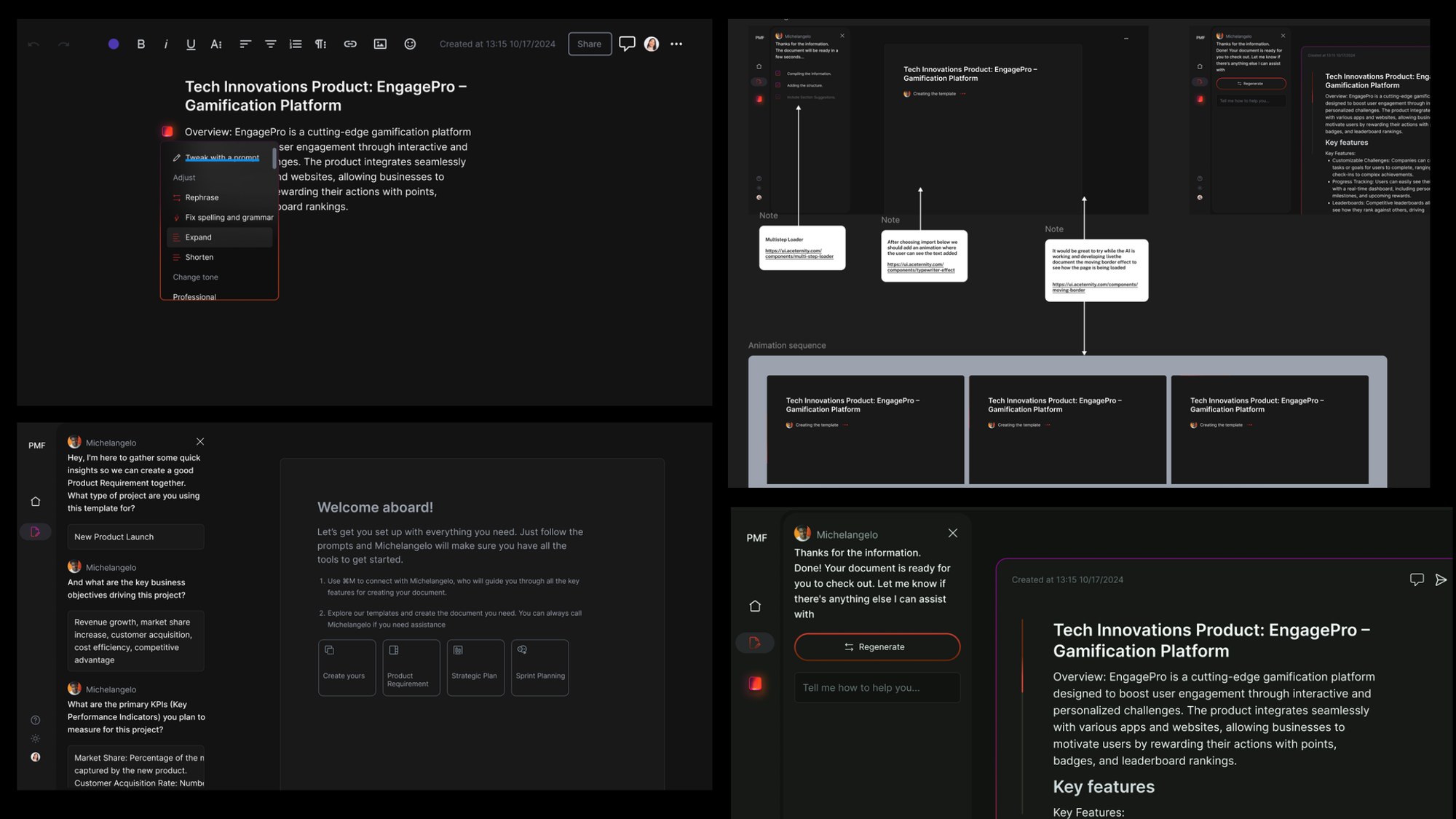
A library of interaction patterns: conversational flows, prompt structures, error and ambiguity handling, and cues for confidence and transparency.
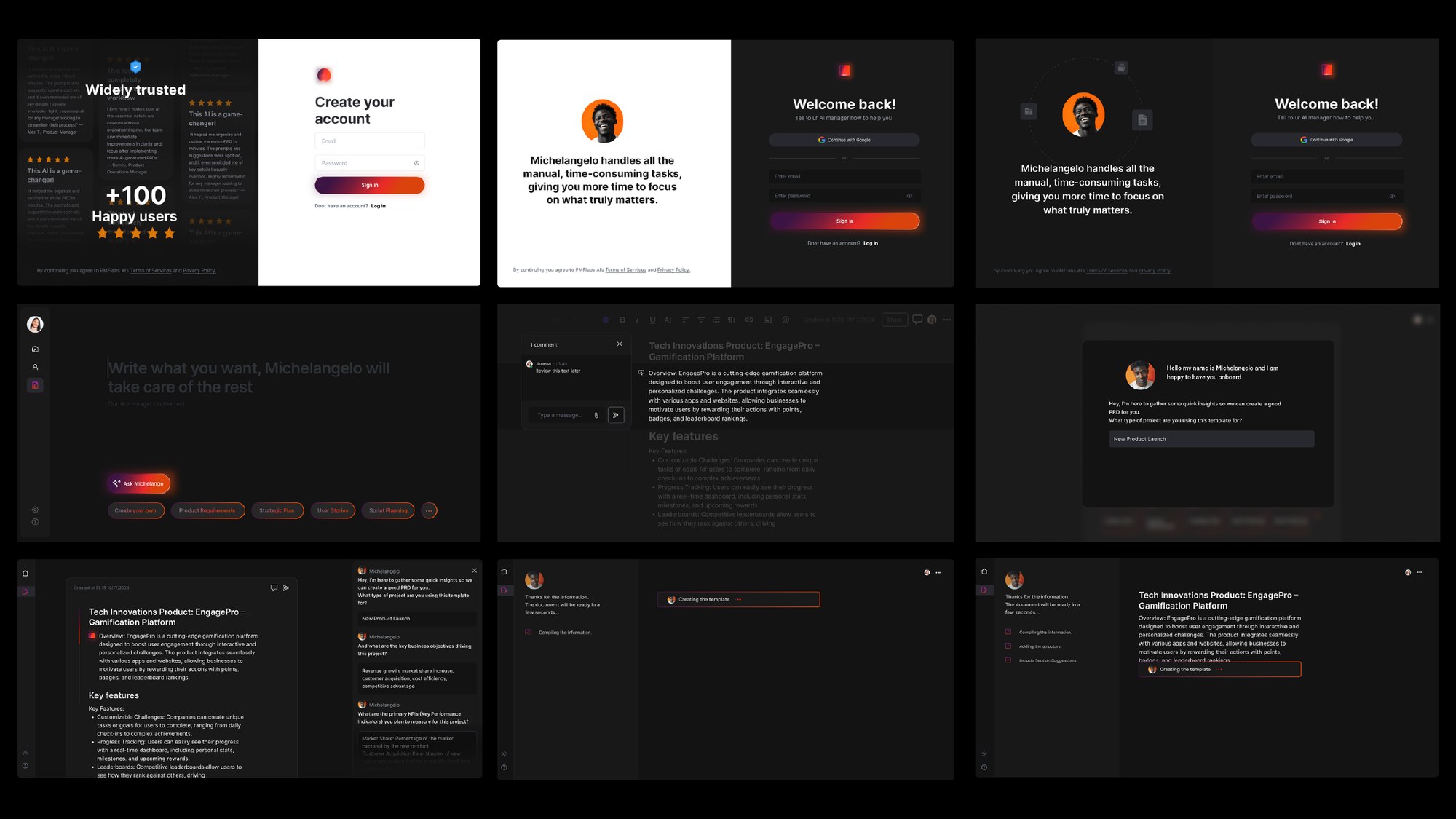
Sign-up, onboarding, prompts and document generation, designed as one consistent experience.
By moving beyond the prototype and defining an AI-native design system, I created a scalable foundation PMF Labs can apply to future products and explorations, with reliability, consistency and a solid UX framework.